AI product video for e-commerce.
For an online store, video is there to sell on the product page and to test ads. Ryze AI Studios produces animated packshots, vertical product spots, A/B variations for Meta and TikTok, and AI-generated UGC creators to test hooks. One limit is clear: a generated creator has never used your product, so it cannot testify like a customer.
What are the video challenges for an online store?
- The number of products. Filming every product, every colour and every size is expensive on a shoot.
- Refreshing ads. A Meta or TikTok campaign is managed by testing several versions. New hooks have to be produced regularly.
- The product not yet made. Showing a model before production lets you test demand before investing.
- Several markets. Switzerland, France, Germany, Austria: several languages and sometimes several currencies in the same campaign.
Which video formats for an online store?
| Format | What it is for | Proposed framing |
|---|---|---|
| Animated packshot | Product page, marketplace listing, stories | Short looping shots, in 1:1 and 9:16 |
| Product spot | Advertising and social media | Short vertical spots, in 9:16 |
| AI UGC | Test several ad hooks without casting | To camera in 9:16 |
| A/B variations | Meta, TikTok and YouTube campaigns | Short versions per hook and per format |
| Animated catalog | Collection, website, newsletter | Each piece in its own light |
| Ambassador | A consistent face for the brand | To-camera and lifestyle videos |
For a weekly production, see ongoing content. For ad formats in detail, see the page on AI video ads.
What video ideas suit a DTC brand?
- Sneakers and fashion. A puddle, a neon light, a sole: the shoe before it even reaches the factory, to measure demand before producing.
- Skincare and beauty. A drop, a reflection, studio light, ready for the product page. The rules on cosmetic claims apply (see the page on luxury and cosmetics).
- Home and decoration. An armchair, a ray of sunlight, nothing else. The animated catalogue without a photo shoot.
- Ad hooks. Ten ad angles with generated UGC creators, to find out which message works before investing in a heavier production.
- Gift sets and holidays. The same product in a winter, spring or back-to-school setting, without changing photo studio.
What has the studio already produced for e-commerce?
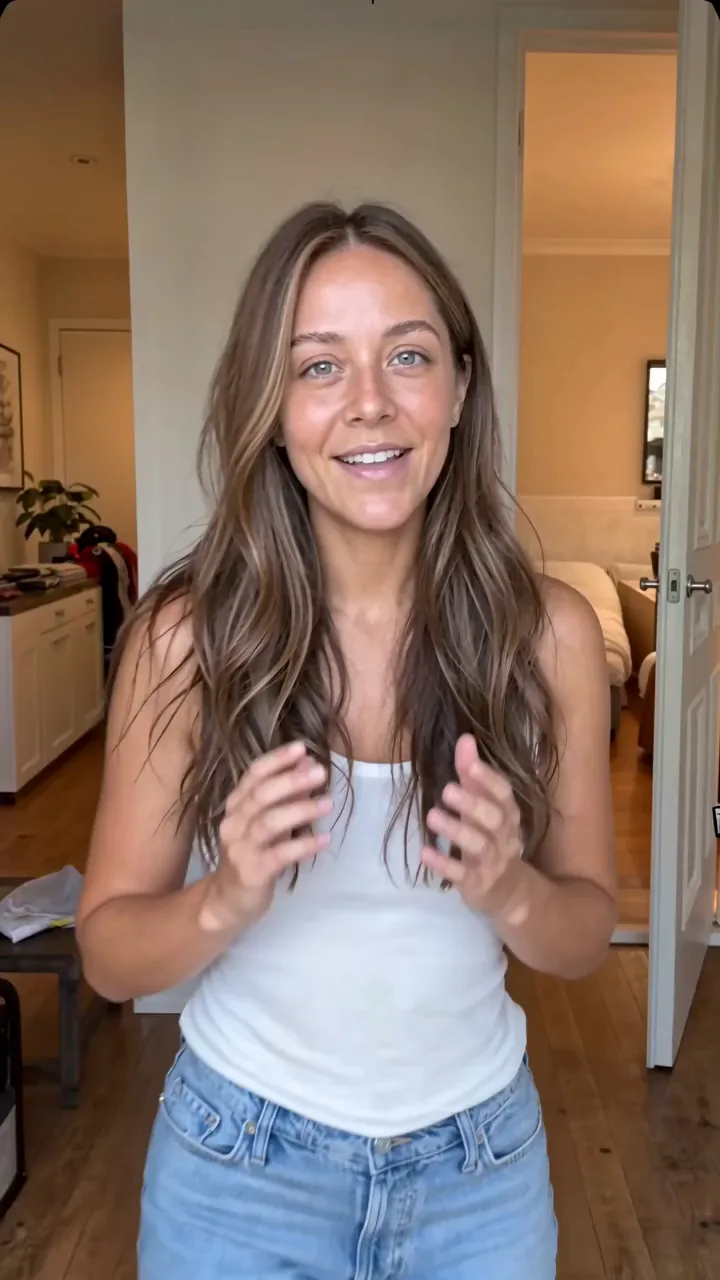
The showreel contains eight four-second vertical product spots: coffee, bicycle, ramen, serum, fragrance, furniture, craft and sneakers. These are fictional brands created by the studio for the demo. It also shows two AI-generated UGC creators, Romi in Brooklyn and Maren on a terrace in Lisbon, in testimonial format. They are characters, not customers.
What is AI UGC, and where does it stop?
UGC (user-generated content) imitates the style of a video filmed by a customer: to camera, direct tone, everyday setting. AI UGC reproduces this style with a generated character. It lets you test several hooks quickly.
It cannot serve as proof. A generated character has bought nothing and tried nothing.
- In the European Union, Directive (EU) 2019/2161 has prohibited, since 28 May 2022, selling, buying or presenting fake consumer reviews to promote products. In a coordinated screening published by the European Commission on 20 January 2022, authorities examined 223 websites, at least 55% of which may breach the Unfair Commercial Practices Directive.
- In Switzerland, giving inaccurate or misleading information about one’s products is unfair (UCA, art. 3 para. 1 let. b).
The studio therefore uses AI UGC as scripted advertising, with the appropriate label, never as a customer review. The full framework is in the rights and disclosures guide.
How do you keep the product faithful on screen?
- Your files. High-resolution photos, colours, dimensions, logo. The product and the logo are only built from your files, with your written consent.
- The script and the storyboard. You approve them before anything is rendered.
- The check. Colour, material and proportions are compared with your references; shots that drift are discarded.
- The variations. Formats, A/B versions, subtitles in French, English and German.
What does the studio not do for an online store?
- Present a generated character as a real customer, or produce fake reviews.
- Change the colour, size or material of a product on screen.
- Show an unmanufactured product as available without saying so.
- Promise a conversion rate, a return on investment or a number of sales.
Frequently asked questions
What is AI UGC?
It is a video in the style of content filmed by a customer (to camera, direct tone, everyday setting), played by an AI-generated character. It is used to test several ad hooks without casting.
Can an AI UGC creator be used as a customer testimonial?
No. A generated character has never used your product. In the European Union, presenting fake consumer reviews has been prohibited since 28 May 2022, and in Switzerland a misleading statement is unfair. The studio uses it as a scripted ad, with the appropriate label.
Can you show a product that has not been manufactured yet?
Yes, to test demand before producing, like the studio’s sneaker demo spot. If the product is offered for sale, you must state clearly that it is a preview and that the model is not available yet.
How many ad versions should you plan?
It depends on your ad budget and the number of hooks to test. The number of versions, formats and languages is set in the quote.
How much does an AI product video cost?
Every project is quoted individually: the site publishes no price list. The amount depends on the number of products, versions, formats and languages. The pricing page details these factors.
Read next
Sources
- Showreel, case studies, sample briefs, offers and method of Ryze AI Studios, accessed on 30 October 2026.
- Representation of the European Commission in Germany, “Schutz der Verbraucher vor irreführenden Bewertungen” (20 January 2022): germany.representation.ec.europa.eu.
- Swiss Federal Act against Unfair Competition (UCA, SR 241), art. 3 para. 1 let. b: fedlex.admin.ch.
Last updated: 30 October 2026