Vertical episodic fiction for your brand.
A branded series is a short, vertical piece of fiction released in episodes on Instagram, TikTok or YouTube Shorts, with characters who return from one episode to the next. Your brand lives inside the story instead of interrupting it. Ryze AI Studios writes it with you (bible, characters, season arc), produces it with AI and has you approve the script and storyboard before anything is rendered. The offer is quote-based.
What exactly is a branded series?
It is also called a branded web series, a vertical mini-series, brand fiction or, in English, a brand series. The idea is that of a serial, brought down to the format of a phone: short episodes, shot in 9:16, that end on an open question. The audience comes back for what happens next.
The difference from an ad fits in one sentence. An ad talks about the product, once. A series tells a story in which the brand has a place: a location, an object, a profession, a value. People don't watch it because it sells, they watch it because they want to know what happens next.
| Commercial spot | Brand series | |
|---|---|---|
| Goal | Get a message or an offer across. | Bring an audience back, episode after episode. |
| Number of videos | One, with its variants. | A season of episodes. |
| Characters | Optional. | Recurring, at the heart of the format. |
| What brings people back | Repeated airing. | The rest of the story, and sometimes the vote. |
| Place of the brand | In the foreground. | Inside the world of the story. |
Why does the episodic format hold an audience?
Three levers, known since the days of the serial:
- The appointment. An episode on a fixed day builds a habit.
- The cliffhanger. The episode stops right when you want more.
- Recurring characters. People get attached to faces, not to slogans.
The microdrama market, those vertical series sold inside apps, shows how strong these levers are on mobile. According to Sensor Tower, short drama apps generated about 700 million dollars in in-app purchases worldwide in the first quarter of 2025, almost four times more than a year earlier, with more than 370 million downloads in the quarter. In China, the China Netcasting Services Association puts the microdrama market at more than 50 billion yuan in 2024, above cinema box office, according to CNBC. And in June 2025, YouTube's CEO announced an average of 200 billion daily views on Shorts.
These figures describe paid apps and entire platforms, not the results of a branded series. They show that people watch vertical episodic fiction. They guarantee no audience for any particular series. The details are in the guide to vertical series.
How does the studio produce a branded series?
- The brief. Your audience, your networks, what the brand brings to the story and what it must never do.
- The bible. The series' reference document: the world, the tone, the rules, the place of the brand.
- Characters and sets. Every character and every location is fixed in a library before the first episode: same face, same voice, same places.
- The season arc. Where the story starts, where it goes, its major turning points. If the audience votes, the possible branches are prepared in advance.
- Episode scripts. Each episode has its hook, its turning point and its open ending. You approve them.
- The storyboard. The shot-by-shot breakdown. You approve it before anything is rendered.
- Renders, voice and animation. The studio picks the right model for each shot, then sorts: any shot where a character drifts is discarded.
- Editing, sound and release. Subtitles, versions for each network, publishing, then reading the comments and the votes.
How do characters stay the same from one episode to the next?
This is the real challenge of an AI-generated series. A model does not remember a face on its own. Consistency is built with four safeguards: the bible, which fixes what never changes; approved reference images for each character; a library of sets reused from one episode to the next; and a human review of every shot. It is the same method as for an AI ambassador, applied to a whole cast.
What does the brand approve, and when?
| Stage | What you approve |
|---|---|
| Bible and characters | The world, the tone, the faces, the place of the brand. |
| Season arc | The path of the story and, if there is a vote, the possible branches. |
| Script for each episode | The dialogue, the hook, the ending. |
| Storyboard | The shot-by-shot breakdown, before anything is rendered. |
| Final cut | The published version, with subtitles and labels. |
Deadlines and usage rights (media, duration, territories) are set in the quote. Your product, your logo or a real face are only used from your own files, with your written consent and the consent of the person concerned. The studio adds the « AI-generated content » label when regulation requires it, and recommends it in every case. The framework is explained in the rights and disclosures guide.
Which options can be added to a series?
- An interactive season website. Episodes, characters, catch-up and voting, like katiaryze.com.
- Votes and co-creation. The audience chooses what happens next, the studio prepares the branches in advance.
- Languages. Voice and subtitles in French, English and German.
- Ad variants. Short versions and A/B tests for Meta, TikTok and YouTube.
- Making-of. Behind-the-scenes videos between two episodes.
- Publishing. Scheduling and calendar on your networks.
- Monthly report. Views, retention, votes: what works, what we change.
When is a series not the right format?
- You need a single video for a fixed date, for a launch for example. A brand film is a better fit.
- The message has to be understood in one go, like an offer or a promotion. A video ad is faster.
- You can't keep up a schedule. A series that stops after three episodes disappoints more than it helps.
- Trust rests on real people, a craftsman or a practitioner. See shoot, AI or hybrid.
- You want a face, not a plot. In that case, an AI ambassador is enough.
What does a series produced by the studio look like?
The studio produces its own series, « Toujours », released on Instagram @nielsryze. The pitch: « She is in Lausanne. He is in Montreux. A code born in Bali three years ago. And the audience decides what happens next. » An episode of 60 to 90 seconds comes out every Friday, starting 20 November 2026. Two words appear at the end of each episode, the audience comments on one of them, and the winning branch becomes the next episode.
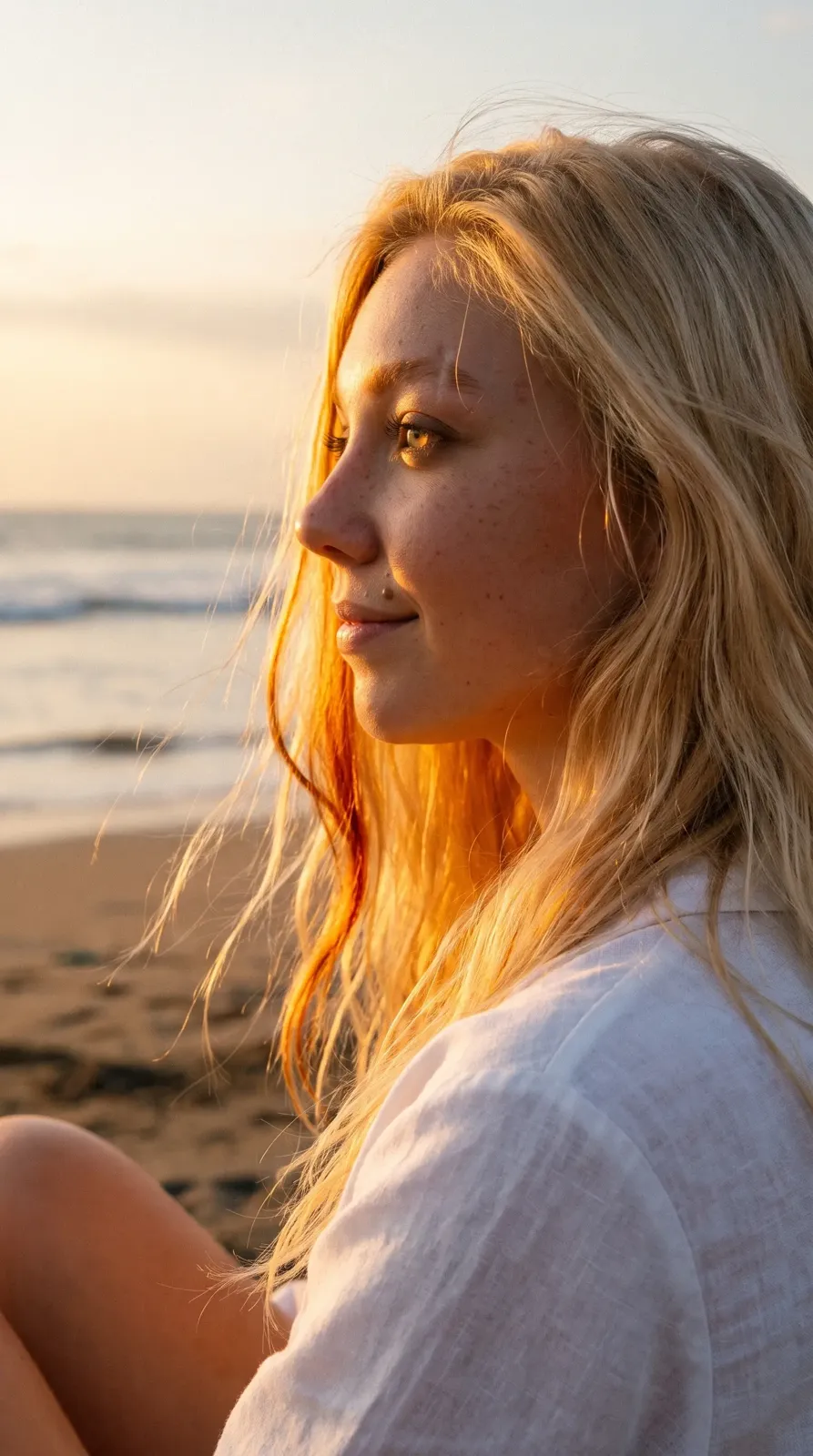
Katia Ryze is an AI-generated character. Niels Ryze is a real person, played on screen by his AI double. The story is fiction. The method, however, is the one the studio applies for brands. Everything is on the page « Toujours », the studio's series.
Frequently asked questions
How much does a brand series cost?
The offer is quote-based: the site does not publish prices. The price depends on the number of episodes, their length, the languages and the variants. The studio sends a quote after a first conversation about your bible, before any production. The pricing page details the factors.
How long is an episode?
Episodes of « Toujours » run 60 to 90 seconds. For a brand, the length is set in the brief, depending on the network and the story, then written into the quote.
Can the audience vote?
Yes. At the end of an episode, two choices are offered. The audience comments on one of them and the winning branch becomes the next episode. The branches are prepared in advance to keep the season on course.
Does my brand have to appear in every episode?
No. Its place is decided in the bible: a location, an object, a profession or a value carried by a character. A brand that is too present turns the series into an ad, and the audience can tell.
Do you have to say the series is AI-generated?
The studio adds the label when regulation requires it, notably the EU AI Act, and recommends it in every case. It suggests the right wording for each network.
In which languages can the series be produced?
In French, English and German, with voice and subtitles.
Read next
Sources
- Offers, options, method and FAQ of Ryze AI Studios, accessed on 30 October 2026.
- Sensor Tower, « State of Short Drama Apps 2025 » (July 2025), estimates of App Store and Google Play in-app purchases: sensortower.com.
- CNBC, « How China's $7 billion micro drama industry is taking on the U.S. entertainment industry », 22 July 2025, citing the China Netcasting Services Association: republished by NBC New York.
- Search Engine Journal, « YouTube Reports 200 Billion Daily Views For Shorts Format », 18 June 2025 (Neal Mohan's keynote at Cannes Lions): searchenginejournal.com.
Last updated: 30 October 2026